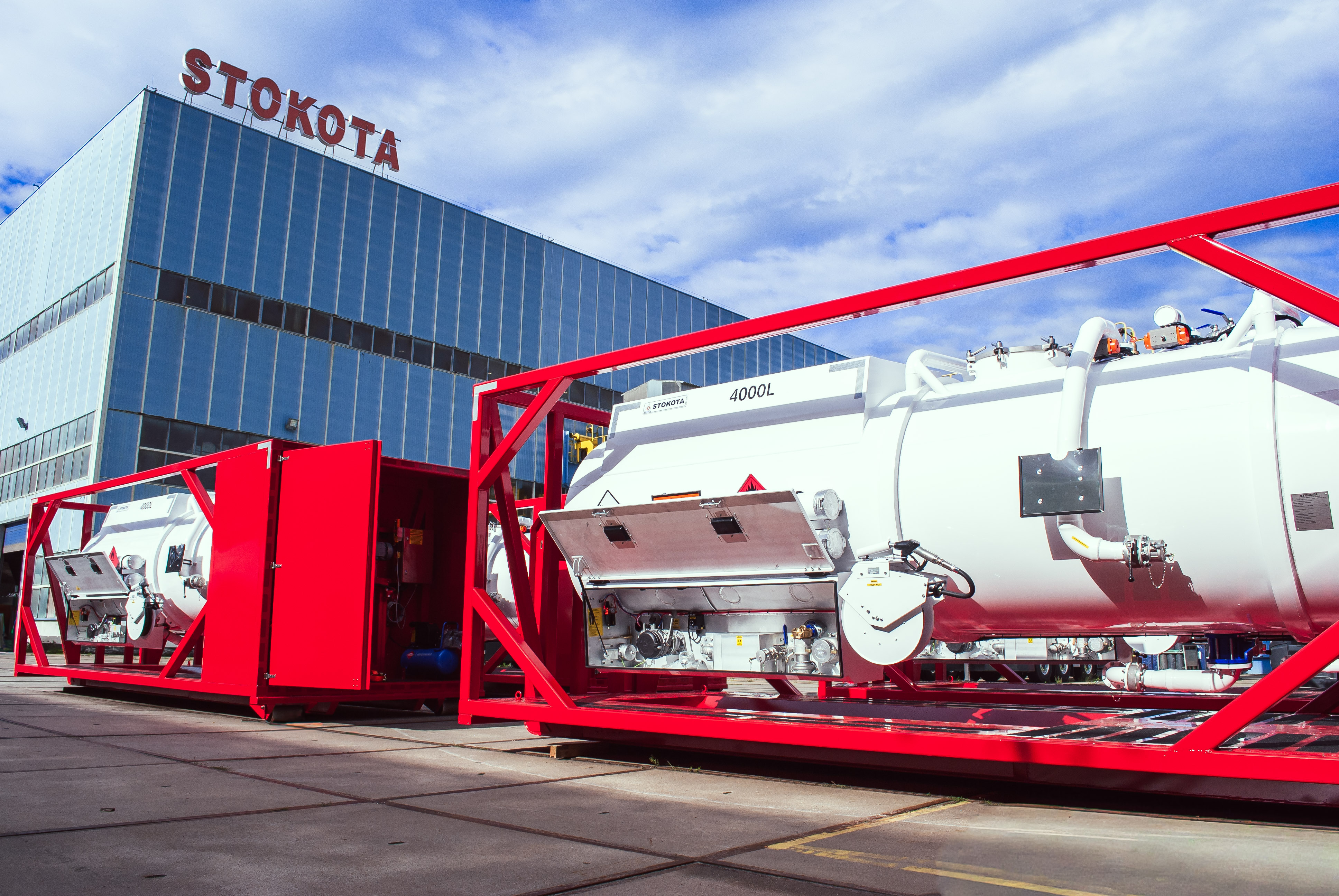
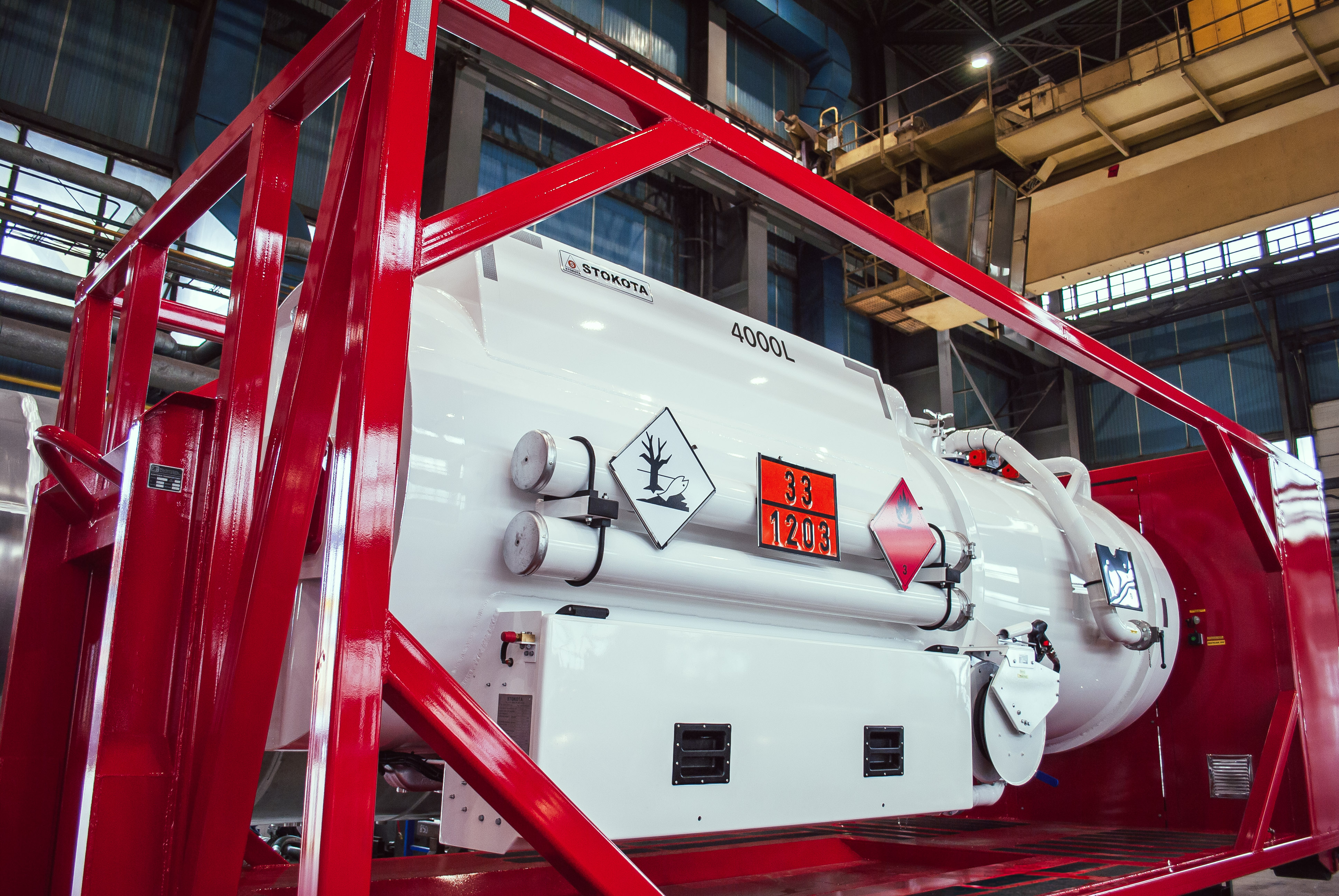
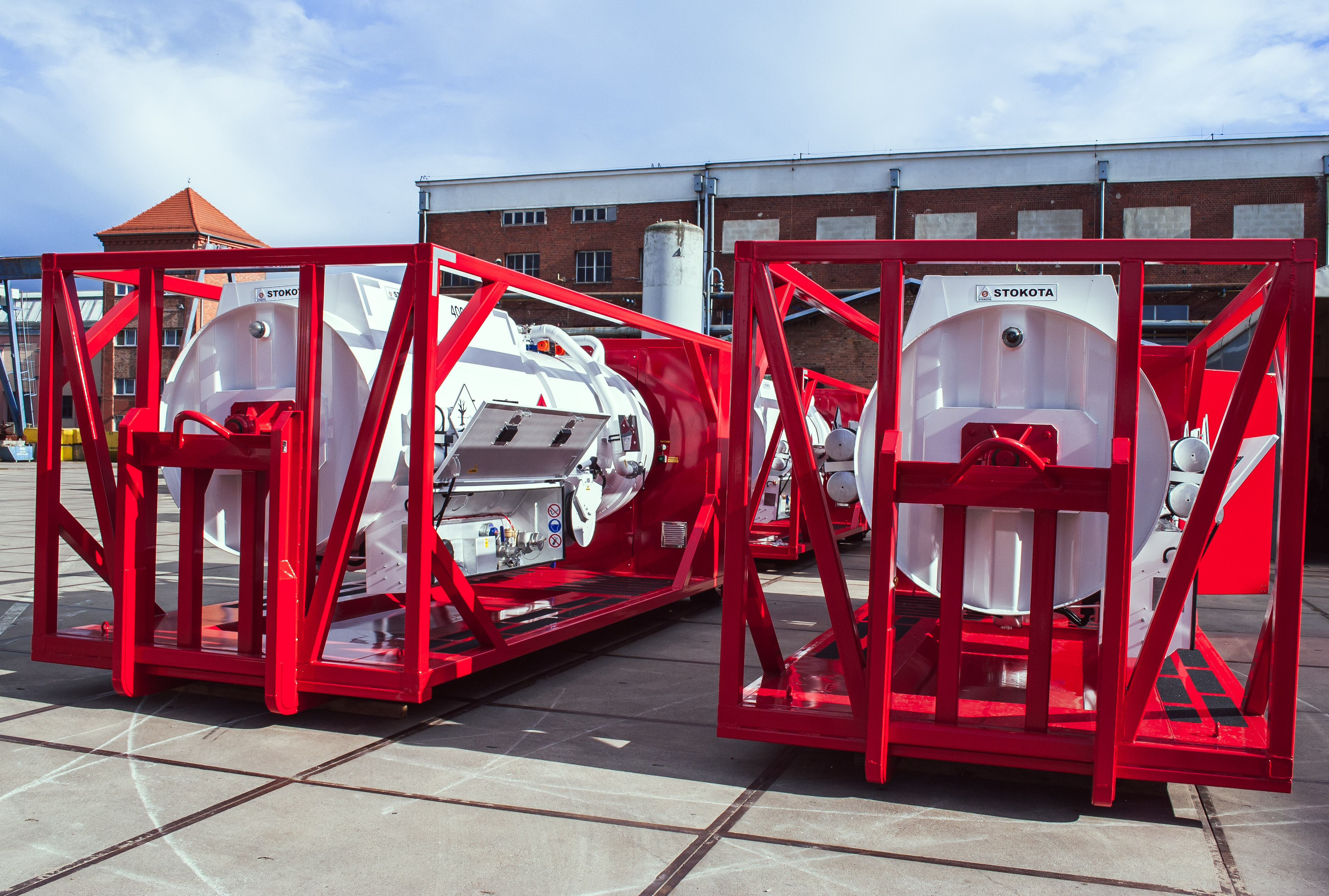
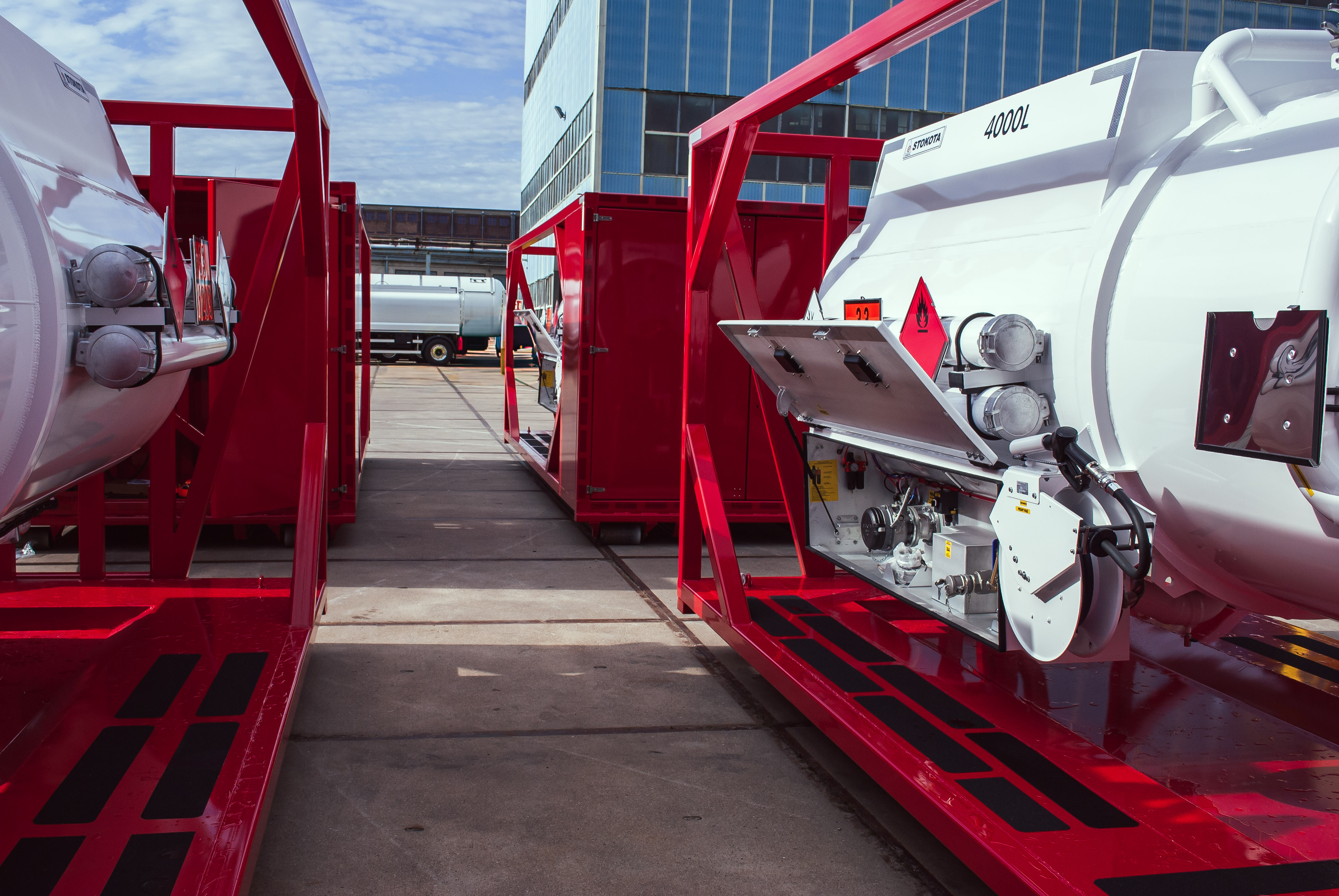
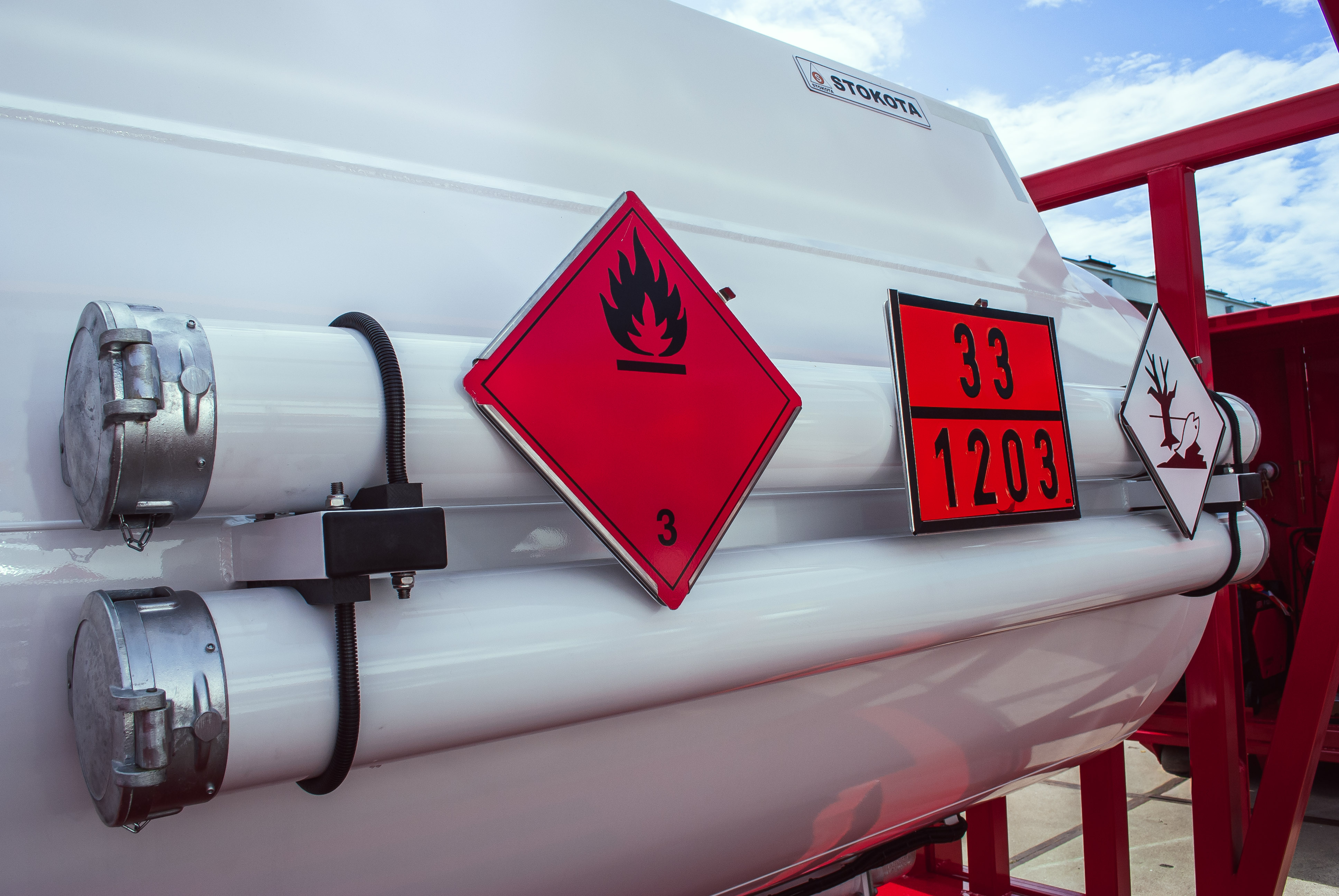
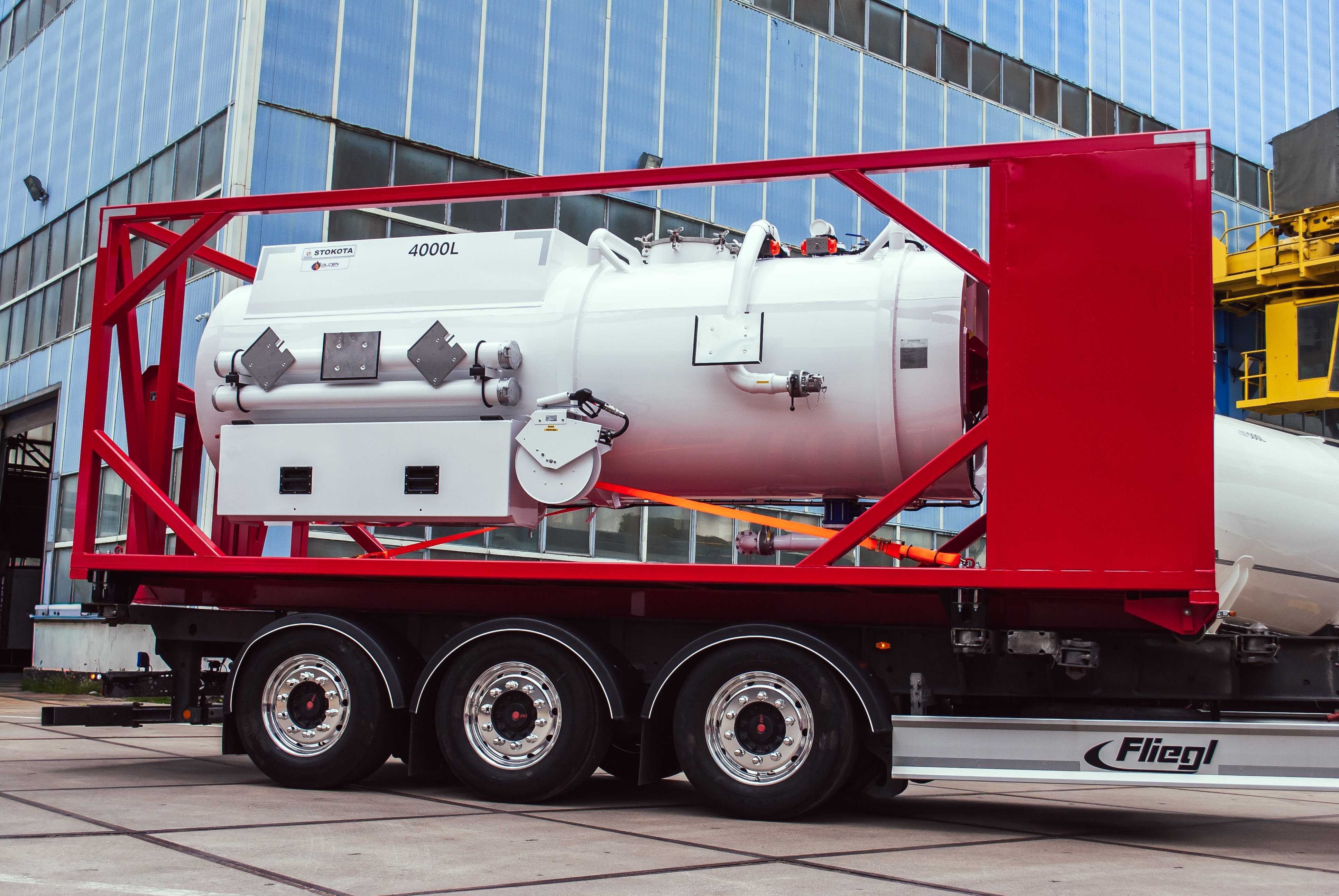
It is the first device of its kind in the world, enabling chemical response teams to practise all possible emergency scenarios involving the road transport of dangerous materials. It allows for the perfect simulation of goods transport and all emergency situations that may arise. The individual simulators will be delivered to fire service training centres, and firefighters from across Poland will soon be able to practise on them.
It was at our Elbląg facility that this pioneering project was developed in collaboration with OLCEN Safety & Rescue. This is just the start of production. We are confident that fire brigades across Poland, and indeed across Europe, will be able to make use of our training device.
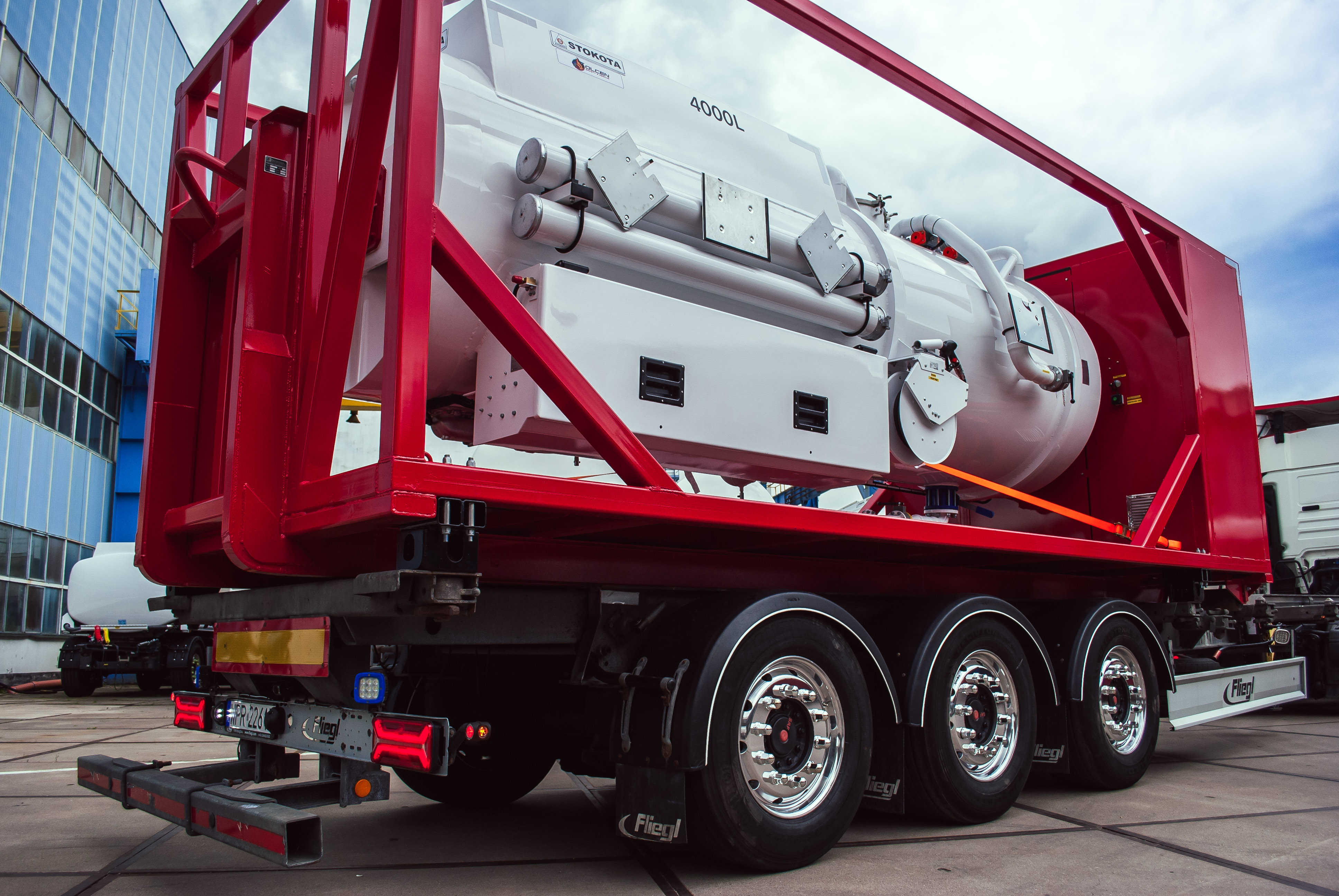
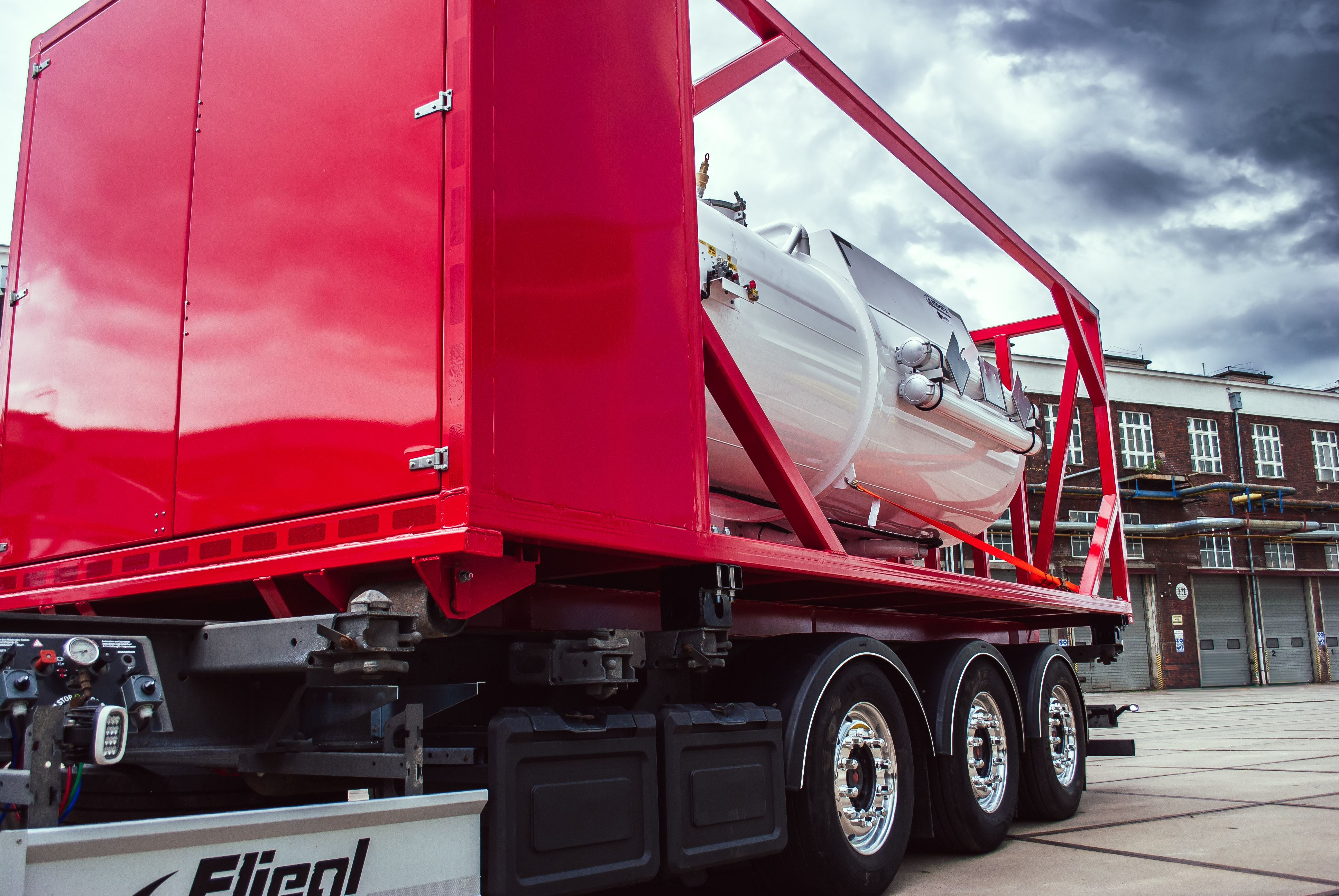
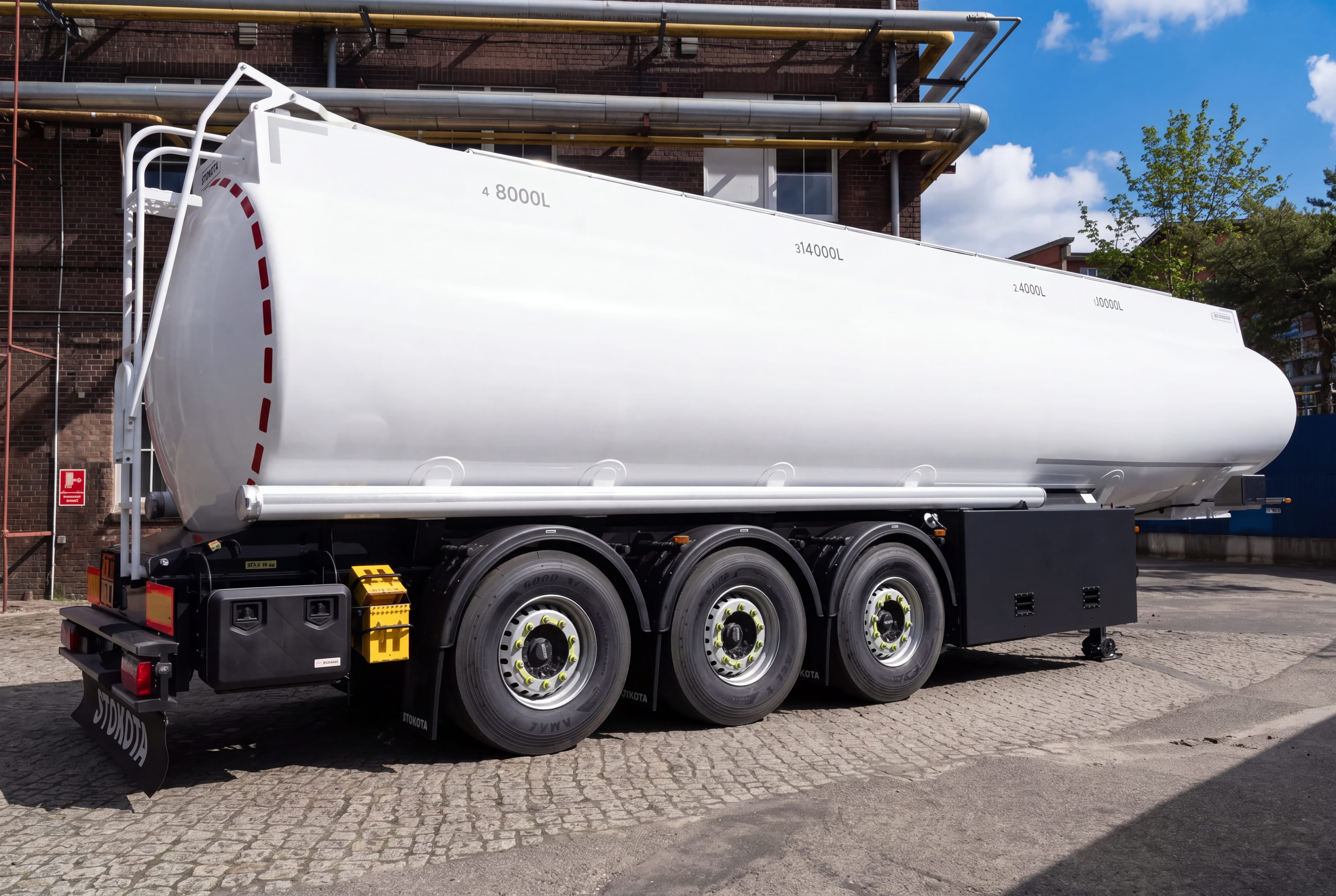
The device is mounted on a platform compatible with the container-handling systems (hook-lift frames) used by the State Fire Service and other institutions wishing to conduct such simulations. More broadly, these simulators can also be used by liquid fuel suppliers and distributors to train personnel in how to respond to potential accidents involving tanker trucks during the transport of hazardous materials.
- total length of the platform (including the hook-lift system) is between 6,000 mm and 7,000 mmtotal mass of the platform (including the trainer unit) does not exceed 14,500 kg
- platform floor made of wear-resistant steel with a minimum thickness of 4.5 mm
- hook-lift pickup point: 1,570 mm; minimum diameter: 50 mm
- rollers for platform transport: minimum dimensions Ø155/6/280 mm
- mounts/fastening points on the trainer platform to ensure secure transport and the proper conduct of exercises
- platform adapted for loading and transport on container carriers and trailers used by the State Fire Service
- transport platform protected against corrosion with a primer coat followed by a polyurethane topcoat (RAL 3000)
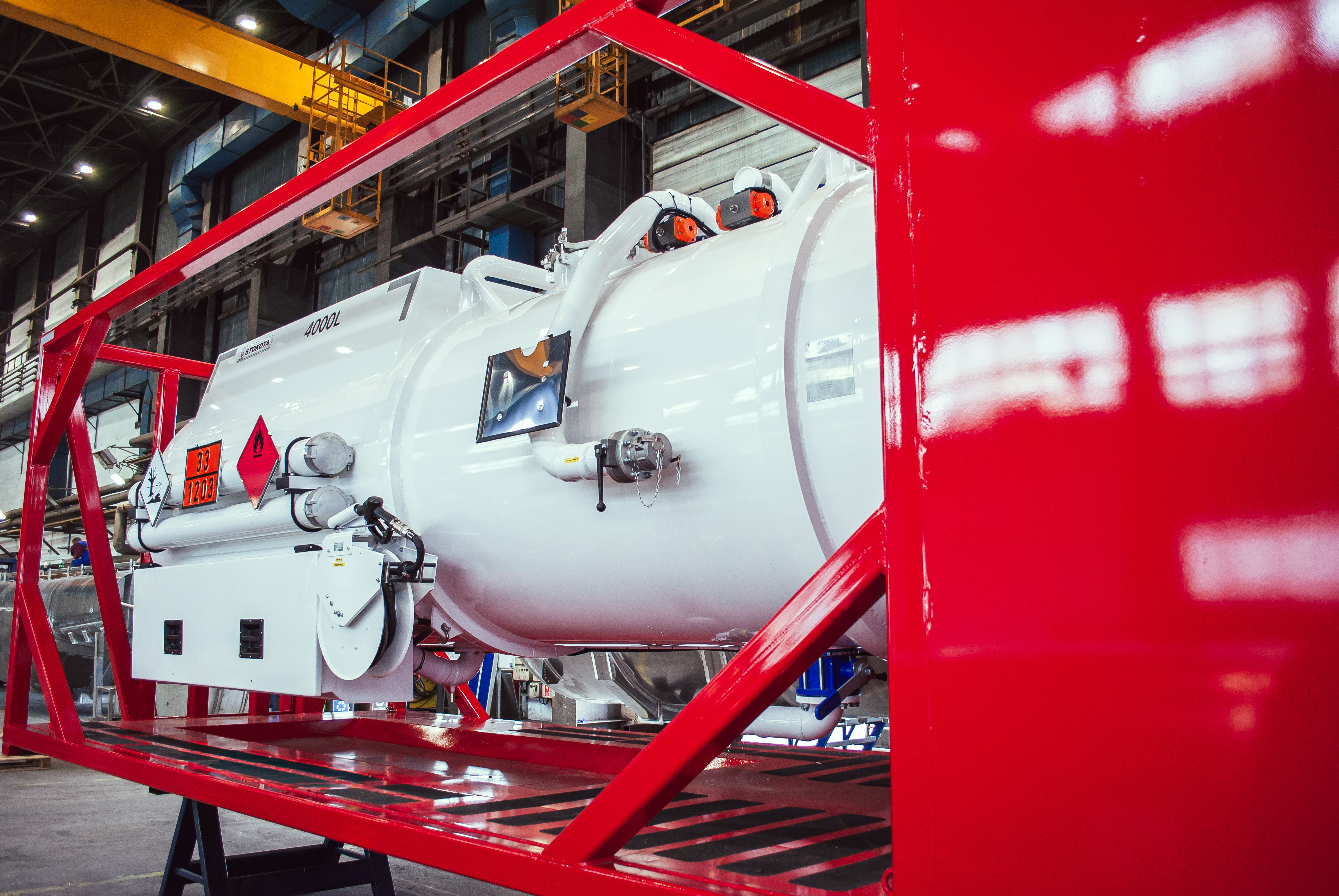
- A dual-compartment trainer tank with a circular cross-section, featuring a capacity of 4,000 dm³ to 4,500 dm³ per compartment and a total capacity of 8,000 dm³ to 9,000 dm³.
- Compartment I (LGBF code, non-pressurized) features a top trough (spill tray), while Compartment II (pressurized) is constructed from aluminum alloy or austenitic stainless steel and equipped with at least one baffle.


.jpg)